



The Cloud Has a Water Bill!
Artificial intelligence may live in the cloud, but its Texas home comes with cooling systems, power lines and a water bill large enough to interest city planners.
The Machinery Behind the Screen
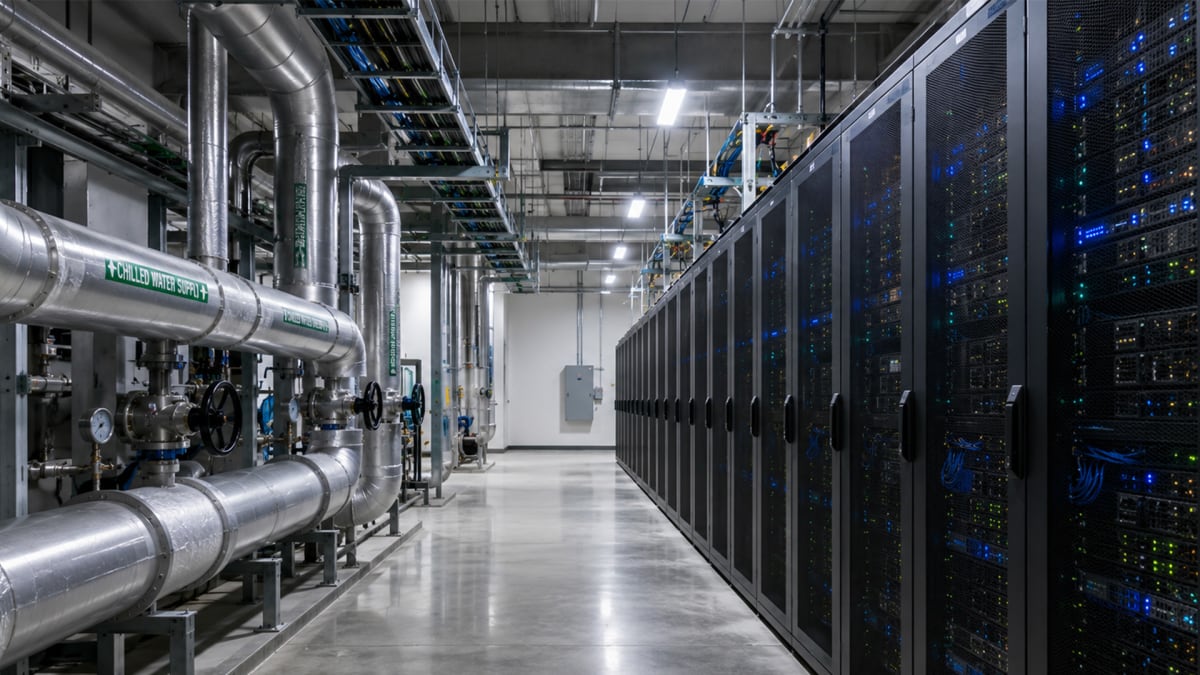
More than 400 data centers are operating or under construction across Texas, driven partly by the computing demands of artificial intelligence. Each facility houses rows of servers that produce heat, which means the digital economy depends on decidedly physical systems to keep those machines running.
New research from The University of Texas at Austin estimates that data centers currently account for less than 1% of Texas water use. By 2040, that share could reach 3% to 9%, depending on industry growth, cooling technology and the type of electricity powering the facilities.
That final piece matters. Water is used directly to cool servers, but it may also be consumed indirectly by power plants generating the enormous amounts of electricity those servers require. Counting one without the other gives communities only part of the bill.
The scale of the demand is already forcing changes at ERCOT. As of mid-2026, proposed large electricity users had submitted connection requests totaling more than 438,000 megawatts. Nearly 90% came from data centers. ERCOT’s entire record peak demand, by comparison, was 85,508 megawatts.
Planning for What Comes Next
Not every proposed project will be built, and ERCOT’s preliminary long-term forecast continues to refine how much demand may actually materialize. Still, the queue is large enough that the grid operator has created a batch-review process to study projects together and determine what the transmission system can reliably support.
Water planning presents a different puzzle because supplies, rules and pressures vary by region. The Draft 2027 State Water Plan draws from all 16 regional planning groups, each charged with evaluating future demand, available supplies and strategies for surviving drought.
The state’s 2026 regional water-planning documents show how carefully population, municipal use, industry and other demands are modeled. Data centers now complicate that work because many barely appeared in earlier forecasts yet may arrive with consumption comparable to major industrial operations.
For Texas communities, the question is no longer whether digital infrastructure has a physical footprint. The question is whether electricity, water and development decisions can be made together before the cloud sends everyone the bill.
For more information on Business and Creative Services, check out the directory! https://www.guidetotx.com/business-consulting
