



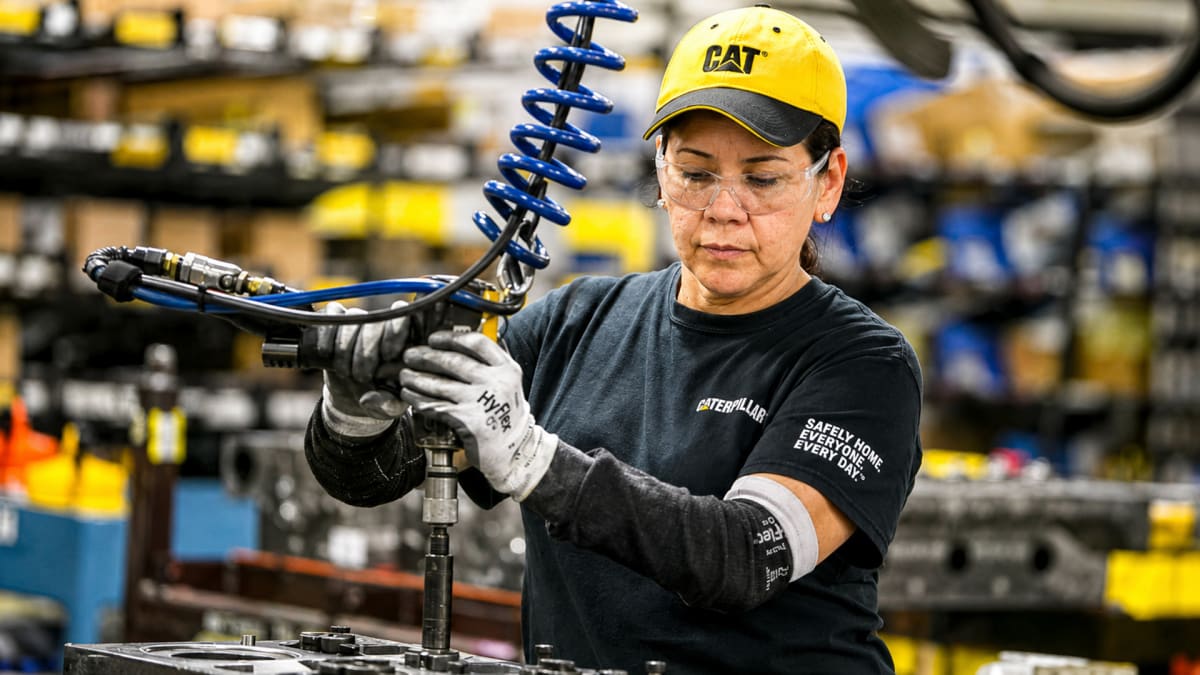
The Tools of Tomorrow
Behind every new manufacturing investment is another one that's just as important: preparing the people who will keep it running. Caterpillar's latest workforce initiative highlights why skilled talent has become one of the industry's biggest priorities.
Investing Beyond the Factory Floor
Caterpillar recently announced up to $5 million in workforce development funding to strengthen manufacturing career pathways and technical training. Working with Texas State Technical College and other community partners, the initiative will help reduce barriers to education, build industry-ready skills, and connect students and job seekers with careers in advanced manufacturing and the skilled trades. The investment is part of the company's five-year, $100 million Building the Future Workforce Initiative.
The announcement reflects a much broader shift across manufacturing. As companies invest in new facilities, advanced equipment, and emerging technologies, they're also investing in the workforce needed to support that growth. Today's manufacturing careers extend well beyond traditional assembly lines, with employers seeking workers trained in automation, robotics, precision machining, digital systems, and other highly technical fields.
Building Talent for Long-Term Growth
A strong workforce has become one of the biggest competitive advantages in modern manufacturing. New plants and production lines can create opportunity, but long-term success depends on having qualified employees ready to step into high-demand roles. That's driving greater collaboration between manufacturers, technical colleges, business organizations, and local communities to expand apprenticeships, certifications, internships, and hands-on training.
Those efforts don’t just benefit employers, but create accessible career pathways into well-paying jobs while helping communities build a pipeline of skilled technicians, machinists, maintenance specialists, and other manufacturing professionals. As experienced workers retire and technology continues to reshape the industry, developing that next generation of talent has become essential to keeping production moving.
Caterpillar's investment is one example of how manufacturers are thinking beyond the factory floor. Building the future of manufacturing starts long before a product rolls off the line. It starts by giving people the skills and opportunities to build it.
Looking to explore more of the businesses driving the state's manufacturing economy? Check out https://www.guidetotx.com/manufacturing.
