



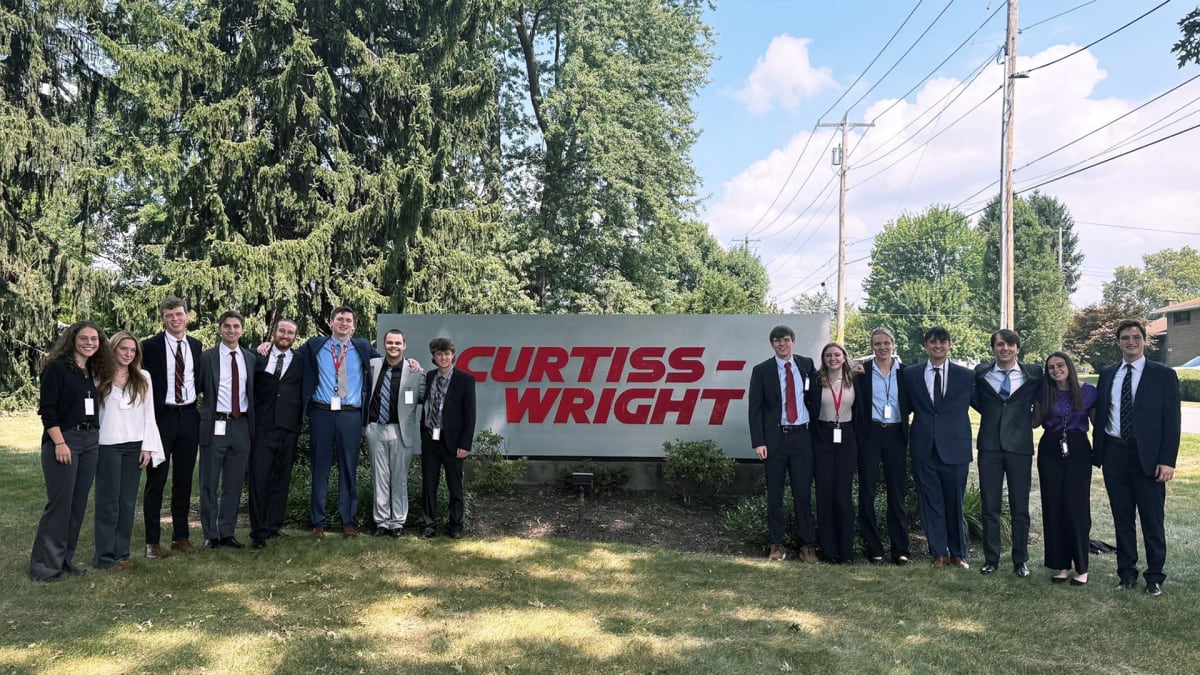
Built to Handle the Pressure!
A nuclear reactor gets the imposing silhouette. A sensor gets the less photogenic assignment: keep reporting what is happening inside it, even when conditions turn punishing. In Round Rock, that quiet responsibility is getting a $30 million investment.
Curtiss-Wright’s planned expansion will increase production capacity for pressure and temperature sensors used in nuclear plants and demanding industrial settings. Announced October 29, the project also aims to improve production flow and add space for an Advanced Innovation Center, a metrology testing laboratory and a project-management office. The company expects to add employees, although its announcement gives no hiring total.
For Round Rock, the significance reaches beyond another larger manufacturing floor. This is where components help turn conditions inside a nuclear plant into information people and control systems can use. The equipment may be small; the assignment leaves little room for a bad reading.
Curtiss-Wright’s measurement and control systems explain the connection. Temperature instruments monitor heat, while pressure instruments track pressure changes, supporting ongoing control of plant processes. The company says more than 80% of U.S. reactors rely on its temperature sensors for critical reactor-coolant monitoring. That puts a Texas manufacturing operation surprisingly close to the business of keeping reactors understood and controlled.
Radiation monitoring handles a different question: have radiation levels crossed a preset threshold? Detectors send electronic signals to analysis systems, which can alert operators and initiate automatic responses when action is needed. The Round Rock expansion will create space for future radiation-monitoring developments, extending the operation’s potential role.
Of course, an instrument cannot become unreliable precisely when its surroundings become difficult. Equipment selected for nuclear service must meet the conditions of its particular application, including radiation exposure, heat, pressure and seismic forces. Accuracy has to survive the assignment.
Consider the company’s nuclear-qualified pressure instruments. Its DTN2070 transmitters have undergone seismic and environmental qualification for harsh nuclear applications, including monitoring inside containment after an accident. Other listed transmitters have been tested for radiation, aging and loss-of-coolant accident environments. These are specific engineering qualifications, each tied to what the equipment must endure.
That helps explain why the expansion includes testing and engineering space alongside production capacity. Making more sensors matters. So does making instruments whose readings remain useful when operators need them most. Round Rock’s contribution fits inside the machinery, but its responsibility extends well beyond the factory door.
See what else is being engineered across the state in the Guide to Texas Manufacturing directory: https://www.guidetotx.com/manufacturing