



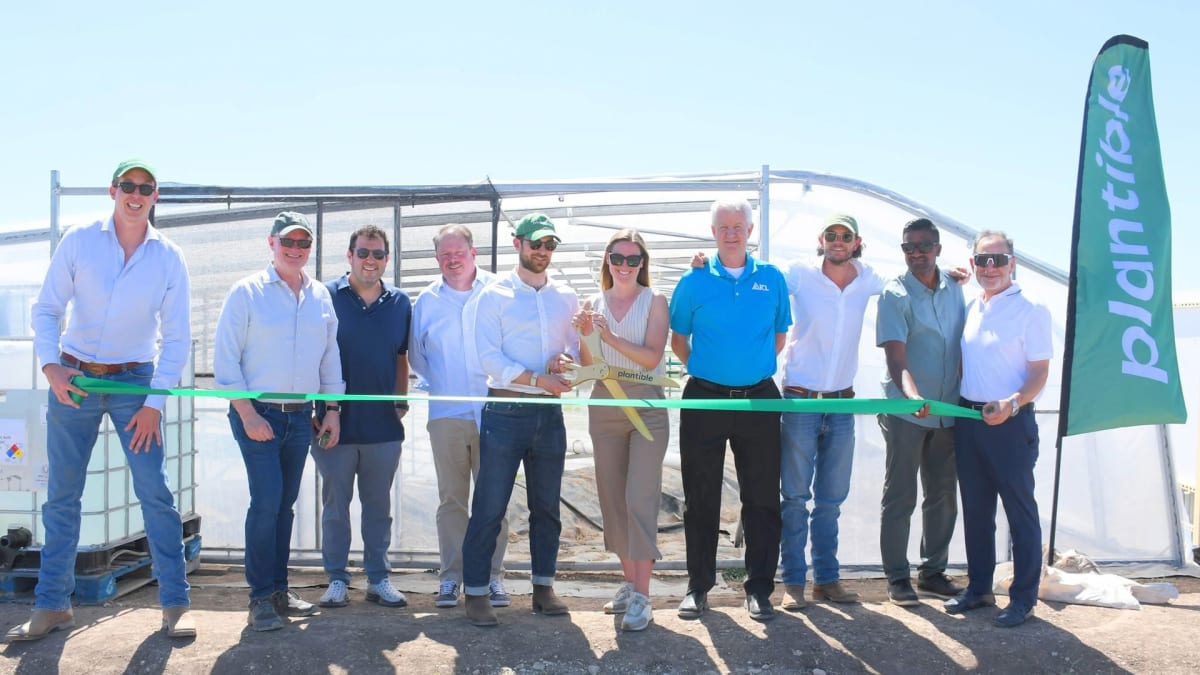
The Future of Protein is Floating!
One of Texas’ more unusual crops floats on water. Now Plantible Foods is preparing to turn those tiny green plants into more than 1,000 metric tons of protein each year.
From Pond to Protein
At its Ranchito facility outside Eldorado, Plantible grows Lemna, commonly called water lentils, inside enclosed greenhouses. The aquatic plant grows across shallow water rather than farmland, which is the first clue that this is not conventional Texas agriculture.
In August, the company announced $35 million in financing to expand the operation. The project could add as many as 50 greenhouses and increase annual production capacity more than fivefold to over 1,000 metric tons.
The process begins with Lemna grown in controlled aquafarms where water can be retained and reused. Once harvested, the plants are milled, filtered and dried to separate the protein. The result is Rubi Protein, an ingredient designed for food manufacturers rather than grocery-store shelves.
What makes it interesting is what the protein can actually do.
Rubi Protein can help bind ingredients, create foams, hold moisture, stabilize emulsions and provide structure. Those are jobs traditionally handled by ingredients such as eggs and dairy proteins. That makes it useful in products ranging from baked goods and beverages to dairy alternatives, desserts, nutrition products and plant-based meats.
A Different Kind of Texas Crop
Plantible says Lemna grows rapidly, requires no arable farmland and uses substantially less water than conventional protein crops such as soybeans. Enclosed production also gives the company greater control over growing conditions than an outdoor field can provide.
That makes Eldorado an intriguing home for the operation. A small West Texas community better known for traditional agriculture is now hosting a specialized food-manufacturing process built around aquaculture, extraction equipment and greenhouse production.
The Ranchito facility already covers about 100 acres, and the additional greenhouses are intended to increase the amount of Lemna the company can grow continuously and feed into its protein-processing operation. Plantible has not announced a specific completion date for the expansion.
The finished ingredient may eventually disappear into a muffin, protein drink or meat alternative without the person eating it ever knowing where it started.
In this case, the supply chain begins with one of the world’s smallest flowering plants quietly floating in a Texas greenhouse.
Hungry for more stories about what Texas makes? Explore manufacturers through the Guide to Texas directory at https://www.guidetotx.com/manufacturing.
