



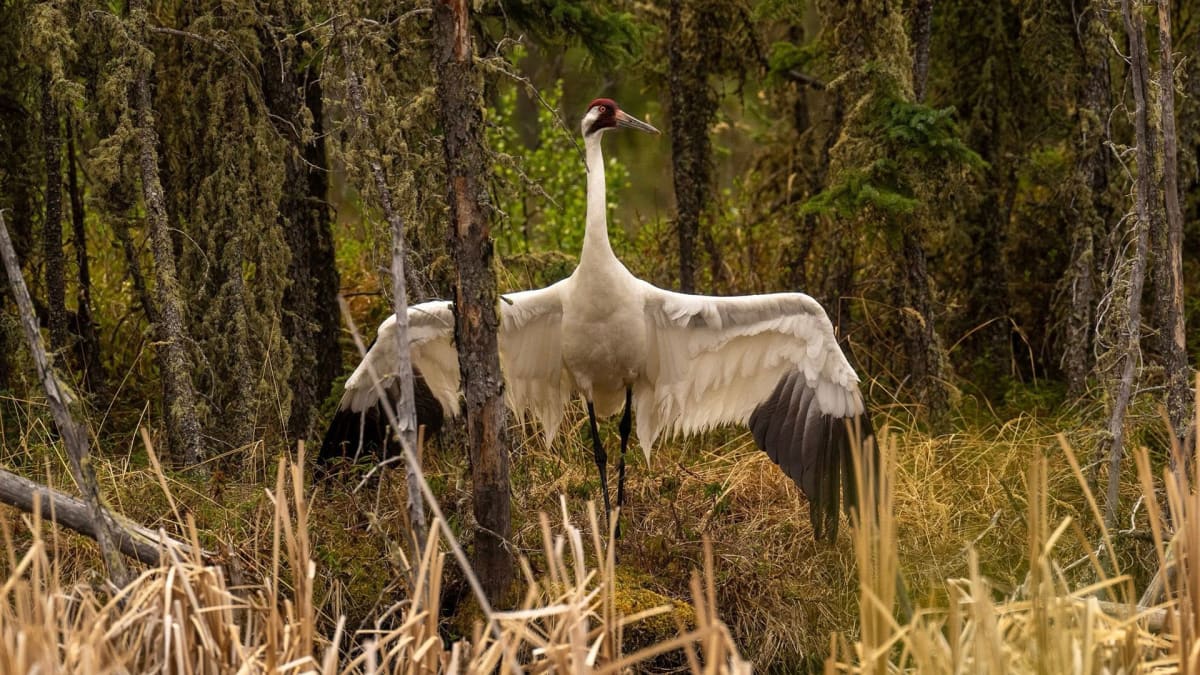
The Tallest Texans Just Flew In!
Texas’ tallest winter visitors are arriving on the coast after a 2,500-mile migration from Canada, bringing five-foot frames, seven-foot wingspans and one of the state’s rarest seasonal spectacles.
Start at Aransas
The latest U.S. Fish and Wildlife Service estimate found about 540 whooping cranes in the primary Texas wintering area during the 2025–2026 season. For a species that once numbered only a few dozen birds, seeing even one still feels significant.
November is when the flock begins settling into coastal marshes around Aransas National Wildlife Refuge. The refuge’s auto-tour route, observation tower and nature trails give first-time visitors several ways to look without crowding the birds.
The auto tour and trails are open daily from sunrise to sunset. Admission is $3 for one adult in a vehicle or $5 for two or more adults, while visitors 17 and younger enter free. Public restrooms are available at the Visitor Center, picnic area and observation towers.
Binoculars are worth bringing. Whooping cranes are impressively large, but they may still be feeding far across marshes and shallow bays. Adults are mostly white with black wingtips visible in flight, while their long necks and legs help distinguish them from smaller white birds sharing the coast.
Give the Cranes Room
The refuge is home to far more than cranes. Its species information notes that more than 400 bird species use the area, which means a crane-viewing trip can quickly become a broader wildlife afternoon.
The best approach is also the simplest: stay on roads, trails and observation areas, watch from a distance and never approach or feed wildlife. A telephoto lens or binoculars gets you closer without actually getting closer.
Visitors with mobility needs can take advantage of accessible refuge facilities, and the driving route makes wildlife watching possible without committing to a long hike. Weather along the coast can change quickly, so layers, water and sun protection belong in the car even in November.
Current crane locations can shift from day to day as birds move between marshes, bays and feeding areas, so checking refuge conditions before leaving home is worthwhile.
Texas has plenty of dramatic seasonal arrivals, but few make one quite like this. No luggage carousel, no rental car, just a seven-foot wingspan dropping into a Gulf Coast marsh.
Ready to spend more time outside? Explore recreation places across Texas through the Guide to Texas directory at https://www.guidetotx.com/recreation-places.
